

I’ve long been interested in the power of quietness. I’ve written poems and songs about it, read books about it, and explored quietness in my daily life—consistently finding that the fewer words I managed to speak, the better everything felt. I viewed quietness like a Zen art of wisdom and mindfulness: something to practice and aspire to.
Now, that viewpoint has changed like a dandelion into puff that blows away.
Quietness is not just something I value and aspire to, like some lofty virtue. No: quietness is something I need.
And it’s something that was taken from me, that I am trying to take back.
The chatty mask
My culture (fundamentalist Christian) and environment (eldest daughter, baby boomer parents, etc.) shaped me to be a friendly people-pleaser. Being chatty and cheerful was the way to be safe. It let others know that I was happy, fine, pleased, not a problem, and ready to help with their problems. It also provided protection against unpredictable, unsafe intrusion: if I was cheerful and chatty, there was no need for anyone to inquire deeper into the actual state of my mind.
I truly had no idea that I did not want to be chatty. My world had nothing to do with considering what I might actually want or not want. Being a good Christian girl meant learning to suppress my thoughts and submit to what I was supposed to do.
I was fascinated, though, by the quiet kids at school, as if they had some kind of magic that was forbidden to me. What are they thinking about? I wondered. Meanwhile I went chattily on, carefully spelling out my very approval-worthy thoughts for everyone to witness and ignoring my embarrassment and discomfort.
That was my safety strategy—my persona or “mask” that I thought I was—and, for the most part, it worked.
The real me likes quiet
Now I’m a grownup with actual safety that I can reach for directly, without having to rely on sideways strategies like people-pleasing. This has freed me to discover the real me underneath the mask, as I wrote about in a poem several years ago:
You mean I can be quiet
without an excuse?
I don’t have to fill silence
with words glib and looseso that others won’t think
I don’t like them or that
I’m unfriendly, depressed,
distracted, or mad?I’ve been so long so busy
with what they might see
that in crafting my image,
I forgot to be me.And the real me likes quiet
and space in between
my own mind and others’—
like an opaque screenbehind which I can listen,
choose words with care,
stay in touch with myself,
and just be aware.
Another, shorter poem from around the same time similarly expresses these feelings as well as my dawning understanding that friendliness is not the same as kindness:
I was raised to be friendly,
to extend my hand
to be shaken,
as if from my own land–for I want to be quiet.
That’s all I ask.
I can be kinder
without a maskof smiles and chatter.
I want instead
to speak what I choose
from a quiet head.
I now also understand that “friendliness” doesn’t have to mean outgoing, bubbly chit-chat, as I used to think it did: I can still be warm and approachable, but in a quiet way that feels truer to me.
Ohhh: the real me is autistic!
My journey toward quietness took a sharp swerve last year when I got diagnosed with autism (level 1, formerly known as Asperger’s Syndrome). In other terms, I am “neurodivergent”—or, if you will, “neurosparkly.” :-)
As you may know, some autistic people don’t speak at all, while others have a very limited ability to speak. I’m obviously very grateful that I can speak. But what I didn’t realize all this time is that speaking costs me significant mental and emotional energy, of which I have a limited amount to get through each day.
It’s a strain to make words out loud to people (I gather this is not the case for those who are not autistic), due, I think, to various particular dynamics in my brain and nervous system, most of all my slower processing speed. It’s hard enough to hold the track of my thoughts—which are taking in a ton of information and making a ton of connections all at once—even when I’m not talking to someone. Conversation introduces unpredictable variables that can feel upheaving, confusing, overwhelming, and demanding.
If I’m just mostly listening to others speak, that’s all right; but when I have to make words in response right then and there, I feel like I’m being thrust out onto thin ice, and I have to just self-abandoningly skate around and hope for the best. It feels risky, uncomfortable, and stressful.
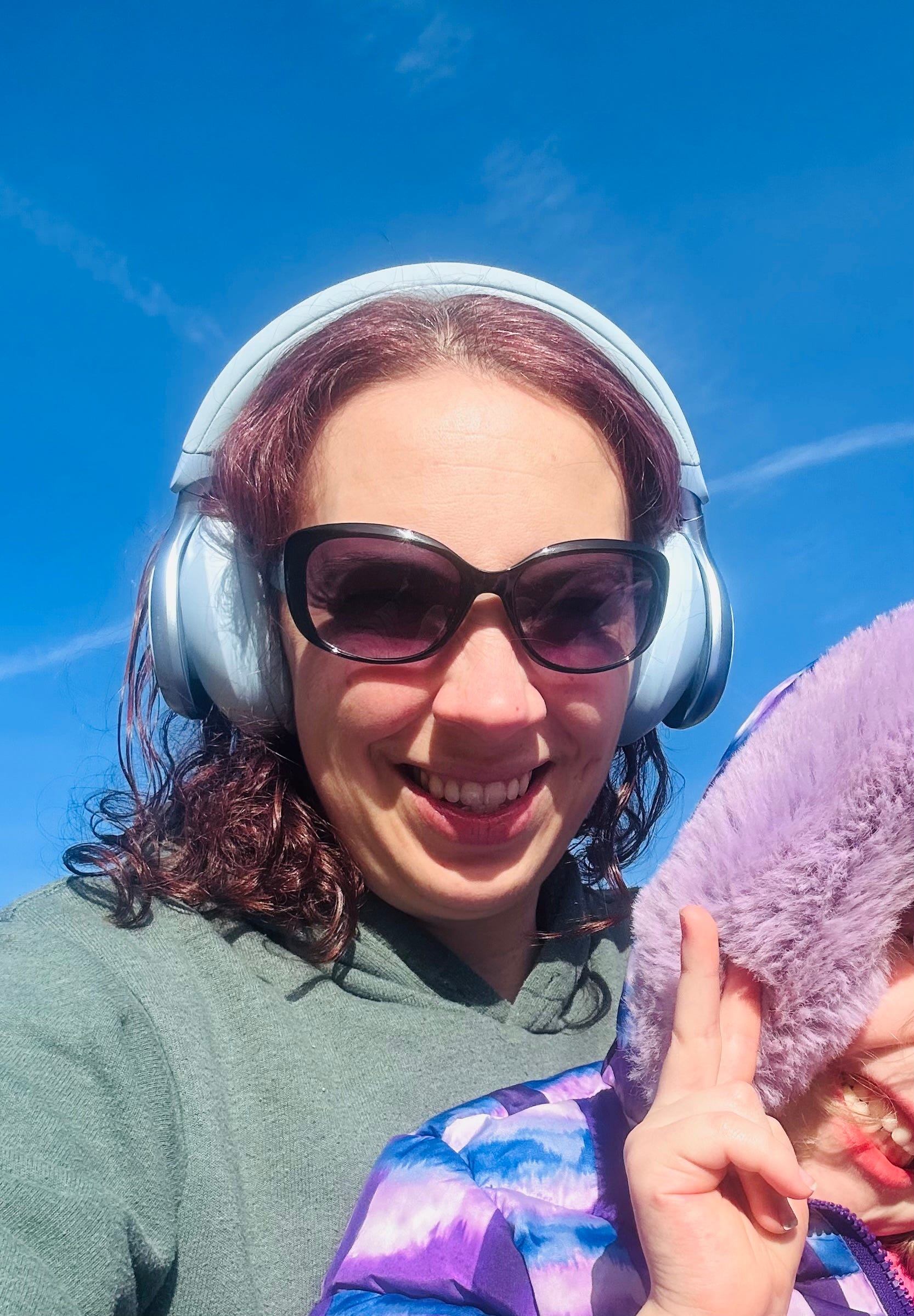
Thus, speaking taxes my nervous system, in the same way that noise, social interaction, eye contact, and external demands do. (Those are other autism-specific struggles that I’ve come to recognize in my own life.) And just as wearing noise-cancelling headphones helps to reduce my overall system strain, finding ways to speak less helps, too.
To spell it out more clearly for anyone reading this who doesn’t get it yet (because I have had some naysayers of the “but you don’t look autistic!” variety): Yes, I can speak. I can make eye contact. I can endure noise, social interaction, and external demands. But all of those things cost me significant coping-energy. They stress my nervous system and, over time, lead me into burnout, exhaustion, depression, overwhelm, anxiety, and so on.
(Here’s an amazing thing, though: writing, by contrast, gives me mental and emotional energy! It’s no wonder writing became one of my main “special interests”—it’s a way of expressing myself that feels good rather than hard!)
I’m trying, therefore, to find and claim ways of speaking less in my daily life.
It’s a practice of boundaries, of self-respect, and—crucially—of paying attention to what I need and what I feel like in relation to speaking.
Finding new options for speaking less
With my kids, at my job, and in my other relationships, I do have to speak some, of course. But there’s a lot of room to practice speaking only as much as I want to or as is truly necessary—and thus being more frugal with the mental energy that speaking costs me.
Work is the easiest, because I have a pretty solid set of conversational scripts built up, by this point, for most issues that arise for my customers. (I work in insurance.) I’ve also learned over time that phone calls with customers go much better if I keep my own words as minimal as possible. Still, though, every single conversation is a strain from which I need to recover.
At home with three highly spirited kids, however, I am very much still struggling and trying to find my way. One thing I’ve started doing is sometimes saying, “I can’t talk right now” (especially if I’m driving or trying to fix dinner, and my kids keep asking me questions like, “Mom, when can we get a pet snake?”)—and then just keep quiet, unless and until it becomes truly necessary for me to speak.
My husband, meanwhile, has grown quite used to my using micro-expressions instead of words to answer his many off-the-wall comments. (We could be a comedic team with him as the comic and me as the straight man staring deadpan at the camera, like Pam on The Office.) It’s a matter of boundaries here, too: when I reply only to communication from him that feels to me respectful and sane, it elevates our interactions to the standards I want.
With my close friends (who are also autistic), all I have to do is say something like, “I don’t feel like talking right now,” and they not only get it, they celebrate with me that I managed to notice my feelings!
There are some other general methods I’m experimenting with, like using wordless sounds (especially “hmm”) and hand gestures to spare me having to speak as long as possible. When words are necessary, I’ll use them; but if something can be solved by my pointing a finger or nodding my head, I’ve just saved myself some energy.
Another strategy I’m beginning to use, this time consciously borrowing from what I’ve learned about autism, is intentional “echolalia”—repeating back phrases the other person has said, as a way to signal that I heard them. This is much easier on my mental bandwidth than requiring my brain to form its own words in reply. Again, when this suffices, it saves me energy.
Sparkling More
After all these years of paying attention to what other people wanted from me instead of what I felt, it still feels mind-boggling that I can be sparing with my speaking, and things will be okay—even better than okay. The more I practice speaking less in pursuit of self-accommodation, the more honest and sustainable my relationships feel, and the more my true joy—which is not a mask, but is from my authentic, connected self-awareness—can sparkle.
May your journey, too, lead you to your own sparkling joy, in whatever form that may take.
It's empowering to be so self aware, know your need for silence, and own that space for yourself. To many moments of quiet, soul-filling sparkles :)
This is so great, honest and well-written. I hope I never left you feeling overwhelmed with my non-stop talking (I am an external processer, after all)! 🤣 But seriously, it's awesome that you've not only grown to know yourself better but also been able to implement those boundaries in your day-to-day life. ❤️
And here's to hoping the kids get over the pet snake thing quickly. They know snakes eat *live food*, right? 😬