

I’ve been noticing that a common experience among myself and my autistic loved ones, as well as autistic people I hear from online, is the experience of crippling distress in reaction to a perceived loss of agency or autonomy.
Some close-to-home examples:
If my 9-year-old autistic daughter has had a long day, and I say that she has to brush her teeth before having more screen time, she utterly melts down.
If I give my 4-year-old something to eat that she hasn’t consented to, she’ll throw it right on the floor.
My autistic BFF sometimes gets debilitating depression and emotional paralysis when she feels powerless to protect herself from victimization.
My autistic sibling has been known to lash out when feeling trapped in some way.
I (diagnosed level 1 autistic) notice that I start emotionally shutting down in significant distress when I feel trapped and unable to take care of my needs, like at an overwhelming social event that I feel powerless (even just too overwhelmed/paralyzed) to leave.
These examples are overt, but I often notice many more subtle instances of this dynamic in all of the individuals above, especially myself.
The common thread is that we feel like our autonomy has been taken away—our consent has been railroaded over—and we are powerless, helpless, and trapped in an unaccommodating situation.
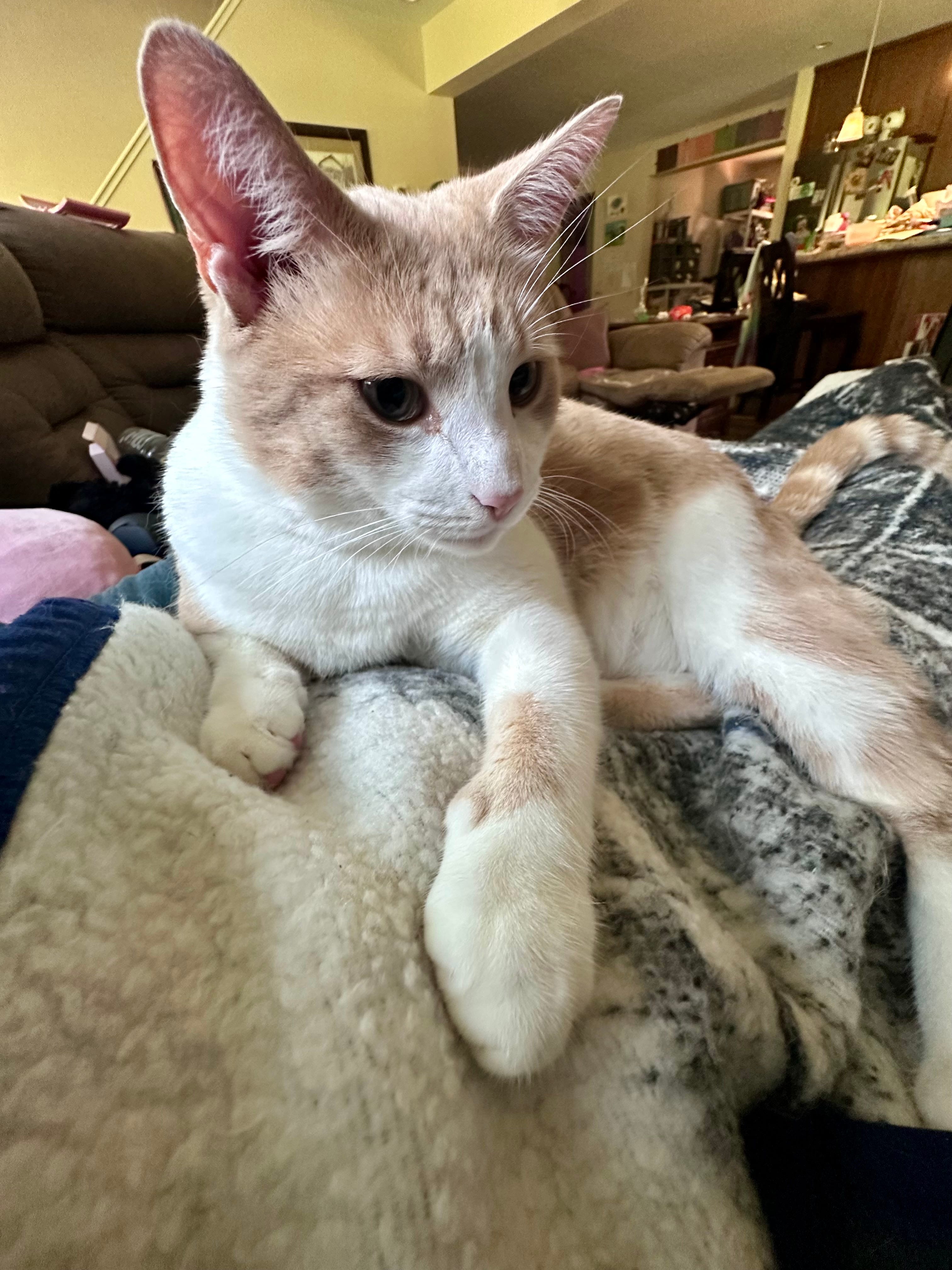
We then react like my cat Milky when he’s forced into a cat carrier: scrambling and squawling, in our own particular ways.
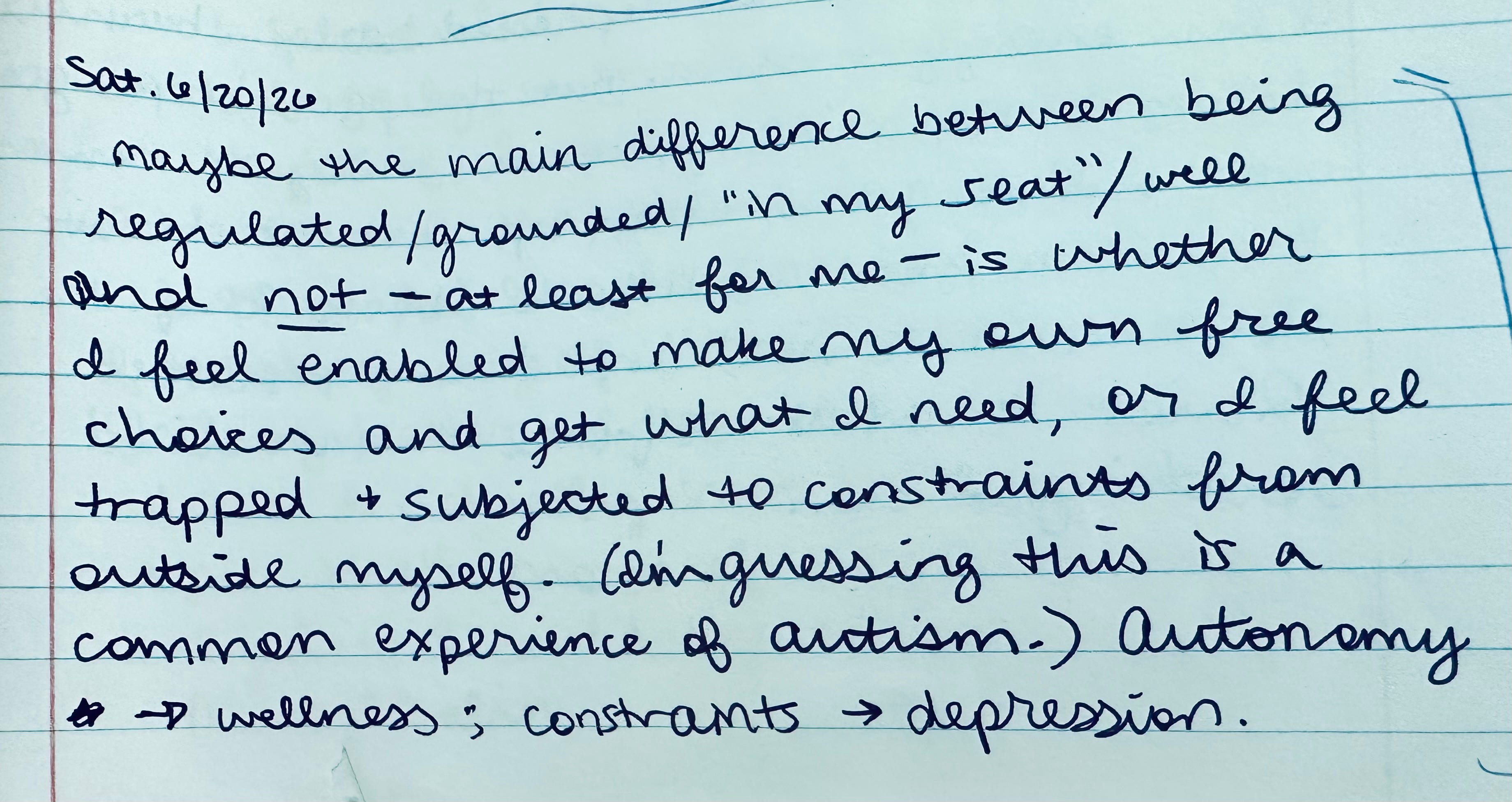
Here’s an earlier version of this perspective, from my journal in June:
Maybe the main difference between being regulated/grounded/“in my seat”/well and not—at least for me—is whether I feel enabled to make my own free choices and get what I need, or I feel trapped and subjected to constraints from outside myself. (I’m guessing this is a common experience of autism.) Autonomy —> wellness; constraints —> depression.
Understanding this about myself and my autistic loved ones shows me how to better help us: in addition to general practices of regulation (routine, connection, etc.), during distress, try to find choice points of autonomy. For example:
With my kids, when they’re melting down, reduce (if possible, eliminate) demands, and try to find real choices I can offer them. (This may have to wait until they’re calmed down enough to think/hear me. I try to stay right with them during meltdowns, until their nervous system slows and co-regulates with mine.)
For myself, when I’m feeling overwhelmed or powerless, get as rational and mindful as I can in looking for choice points and options. It can even help to name options that aren’t actually options I want, just to show myself that I have options: I could not fix lunch for my kids; I could skip work today; I could leave the milk and other food out to spoil overnight. When I choose not to take those options, I am instead choosing what seems to me my “best-guess best option” (a helpful phrase my friend and I use a lot), even if it’s hard and I just have to get through it. It’s still an option, and just recognizing that can help tremendously to shift me from feeling like a helpless child to feeling like a mindful, consenting adult.
I think the word “agency” is a helpful distillation of all this. We need a sense of agency in order for our nervous systems to feel regulated and safe. This is perhaps true for everyone, but at least/especially for autistic people like me and my loved ones.
All of these thoughts were part of what went into my latest Serenity Splash poem, “Enduring (self-abandoned) vs. Enduring (self-companioned),” so I’d like to close this by sharing it again here.
There's a kind of enduring
  hard moments and tasks
    that’s not the same at all
as the kind of enduring—
  helpless and alone—
    we did when we were small.

I learned to suppress
  my feelings and needs
    and pretend everything was fine.
You learned that there
  was no one anywhere
    who cared about your cries.

Now we’re grown
  and in the grind,
    but we have points of choice—
to recognize our options
  and respond
    to our own voice. 💗